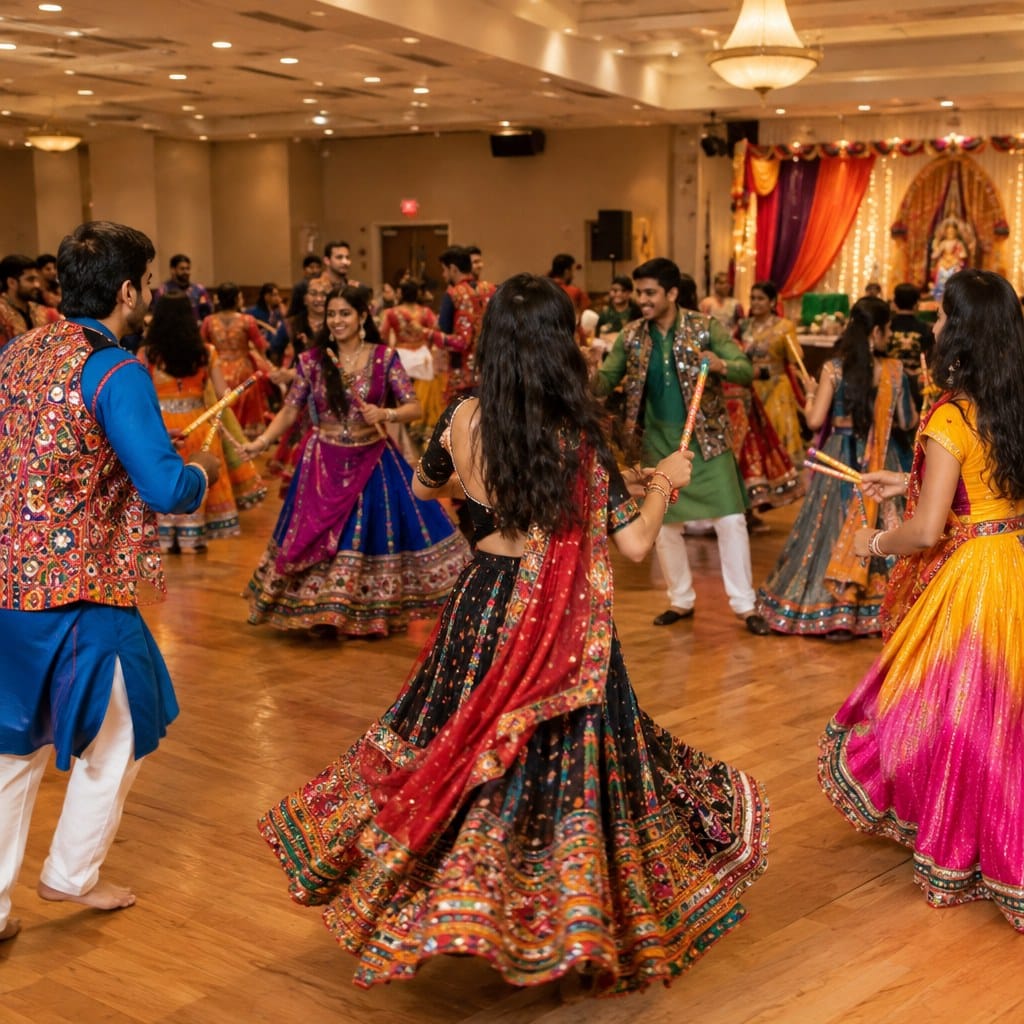
Planning for Navratri 2027 in the USA? This guide explains the festival’s meaning, how Indian-American communities celebrate, where to look for Garba and Dandiya events, how to prepare for puja at home, and what to check before attending a local programme. Event schedules, venues, tickets and timings can change from one year to another, so treat this as a planning guide and confirm each event with its organiser before travelling.
Navratri is celebrated in many traditions across India and the diaspora. In the United States, the autumn festival is especially visible through community Garba nights, Dandiya Raas, temple worship, cultural performances, family gatherings and devotional music. The experience differs by city and community: some programmes focus on dance and live music, while others centre on Durga Puja, fasting, aarti and spiritual observance.
What is Navratri?
Navratri means “nine nights” and honours the Divine Feminine, commonly worshipped as Goddess Durga and her forms. During Sharad Navratri, devotees reflect on courage, compassion, discipline and the victory of good over evil. Customs vary by region, family tradition and sampradaya. Some households observe a fast, others perform daily puja, and many take part in Garba or Dandiya Raas after work or on weekends.
Navratri is not a single uniform celebration. Gujarati communities often place special emphasis on Garba and Dandiya; Bengali communities may focus on Durga Puja; North Indian families may observe fasts and recite devotional texts; and many temples offer aarti, bhajans and community meals. In the United States, these traditions often come together in multicultural events where families introduce children to music, language, clothing and rituals from their heritage.
Navratri 2027 dates in the USA
Sharad Navratri follows the Hindu lunar calendar, so dates should be checked against a reliable panchang for the city where you live. Local sunrise, tithi and the tradition followed by a temple can affect the observance date. Calendar listings for India should not automatically be copied into a US event announcement. Before publishing or making travel plans, confirm the Navratri start, Ghatasthapana or Kalash Sthapana timing, Ashtami or Navami observance, and Vijayadashami/Dussehra date for your US city.
For accurate local timings, consult a city-specific Hindu calendar such as Drik Panchang and then verify the temple’s own notice. A temple may follow a particular regional calendar or announce a community celebration on a convenient weekend rather than on the exact tithi. Always distinguish the religious date from the date of a ticketed Garba event.
Where to look for Navratri events in the USA
Large Indian-American communities in New Jersey, the New York metropolitan area, California, Texas, Illinois, Georgia, Massachusetts and the Washington, DC region often have cultural organisations, temples and event promoters that host seasonal programmes. This does not mean a particular venue has confirmed a 2027 event. Use the following as places to begin your search, not as a promise that an event will take place.
- New Jersey and the New York area: Check local Hindu temples, Gujarati associations, university Indian student organisations and community event calendars. Search by town as well as by state because programmes may be held in Edison, Jersey City, Parsippany, Iselin or other nearby communities.
- California: Search city-specific listings for the Bay Area, Sacramento, Los Angeles and San Diego. Community halls and cultural centres may announce Garba nights separately from temple puja programmes.
- Texas: Check Houston, Dallas–Fort Worth and Austin community organisations, temples and Indian cultural associations. Verify the address and parking instructions with the organiser.
- Illinois and the Midwest: Look for events in the Chicago metropolitan area and nearby suburbs. Some organisations run family-friendly programmes with separate children’s activities.
- Georgia and the Southeast: Search Atlanta-area temples, cultural associations and university groups. Confirm whether the programme is a devotional gathering, a dance event or both.
- Massachusetts and the Northeast: Check Boston-area temples, student groups and regional Indian associations for worship schedules and cultural nights.
- Washington, DC and nearby states: Search local temple calendars and community organisations in Maryland, Virginia and the District. Events may be listed under the suburb rather than “Washington, DC.”
Use searches such as “Navratri 2027 Garba near me,” “Dandiya night 2027 [city],” “Navratri puja [city] temple,” and “Gujarati association Navratri [state].” Prefer an organiser’s official website or verified social account over an old event page, a ticket reseller’s stale listing or an unverified repost.
How to verify a Garba or Dandiya event
Before buying tickets, check the organiser’s name, venue address, event date, doors-open time, programme end time, ticket terms, age restrictions, dress guidance, parking and public-transport options. Review whether sticks are supplied or must be brought, whether children need their own ticket, and whether the venue has rules about outside food, water bottles or professional cameras. If a listing names a celebrity performer or a special guest, verify the announcement on the performer’s or organiser’s official channel.
Be cautious of copied event pages that show last year’s date or reuse old promotional artwork. If ticket links redirect to an unfamiliar site, contact the organiser before paying. Save the ticket confirmation and check for any updates on the day of the event, especially if weather or venue access may affect the programme.
What happens during Garba and Dandiya Raas?
Garba is a circular folk-dance tradition associated with Gujarat. Participants move rhythmically around a central point, which may symbolise a lamp or sacred presence. Dandiya Raas uses decorated sticks and coordinated steps, usually performed in pairs or groups. At diaspora events, live singers, DJs, percussion, traditional costumes and community food may add to the atmosphere. Beginners are welcome at many events, but formats differ, so check whether the organiser offers a beginner-friendly session.
For a comfortable evening, wear clothing that allows you to move safely, choose footwear suitable for dancing, carry water if permitted, and take breaks when needed. Follow the dance circle’s direction and give other participants space. If you are attending with children, agree on a meeting point and keep them away from crowded entrances and equipment areas.
Navratri puja at home
Families who observe Navratri at home may clean the puja space, place an image or murti of the Goddess, light a diya where safe, offer flowers and fruit, recite prayers, and perform aarti. Some households establish a kalash on the first day and maintain it according to family custom. Practices vary, so follow the tradition taught by your family or trusted priest rather than assuming every ritual is compulsory for everyone.
If you keep a diya or incense burning, never leave it unattended. Keep flames away from curtains, decorations and children, and follow local fire-safety rules in apartments and rental homes. If your building prohibits open flames, use a safe alternative and ask your temple for guidance.
Fasting and food traditions
Some devotees fast for one or more days, while others avoid particular ingredients or prepare special meals. Commonly seen foods differ across households and regions; there is no single menu followed by every Navratri observer. If you are invited to a community meal, ask about ingredients, allergens and dietary arrangements. Event organisers should clearly label vegetarian food and disclose common allergens where possible.
Fasting is a personal and religious choice. Anyone with health-related dietary needs should prioritise their wellbeing and seek appropriate professional guidance rather than feeling pressured to follow another person’s fasting routine. Children and guests may participate in the cultural aspects of the festival without observing a fast.
Clothing and cultural etiquette
Many people enjoy wearing chaniya choli, kediyu, lehenga, kurta or other festive clothing, but there is no single outfit required for every event. Check the venue’s dress guidance, choose comfortable layers and secure loose accessories before dancing. Traditional clothing is a joyful way to participate, but respectful behaviour matters more than a particular garment.
At a temple, follow posted instructions about shoes, photography, offerings and entering the prayer area. Ask before photographing worshippers, children or private rituals. At a dance event, respect personal space and the organiser’s rules. Guests unfamiliar with the customs can ask a volunteer for help; most community events welcome sincere questions.
How families can celebrate Navratri with children
Children can learn the stories of Durga, listen to bhajans, make paper decorations, help arrange flowers, attend a family-friendly Garba session or learn a few simple dance steps. Explain that families may celebrate differently and that no one should be mocked for their language, clothing, food choices or level of religious observance. If attending a crowded event, write a parent or guardian’s phone number on a card and identify staff or security who can help if a child becomes separated.
Travel, parking and accessibility
Many programmes take place in community halls, school gyms, convention spaces or temple grounds rather than in the centre of a major city. Check the precise venue address, parking charges, public transit, entry queue and accessibility arrangements. Ask the organiser about step-free access, seating, quiet space, accessible toilets and assistance if these are important for your group. Do not assume that a venue’s accessibility information from a previous year remains accurate.
Arrive early if the organiser recommends it, allow extra time for traffic, and use only authorised parking. For late-night events, plan your return journey in advance. If travelling with a group, choose a meeting point outside the busiest entrance and keep your ticket information available.
Navratri and Durga Puja: what is the difference?
Navratri is the nine-night festival dedicated to the Goddess in several forms. Durga Puja is a major worship tradition particularly associated with Bengal and Bengali communities, featuring elaborate pandals, ritual worship, cultural programmes and the immersion or farewell observances at the end of the festival. These observances overlap in the autumn calendar but are not interchangeable in every community. In the United States, one city may host a large Garba event while another community centres its celebrations on Durga Puja.
For a more useful search, choose the term that matches the event: use “Garba” or “Dandiya” for dance programmes, “Durga Puja” for pandal and puja schedules, and “Navratri puja” for worship and fasting guidance.
How to find verified 2027 announcements
- Start with the official website or verified social account of a temple, cultural association or event organiser.
- Confirm the date, time, address and ticket details on the same current-year announcement.
- Check whether the event is open to the public, requires registration or is limited to members.
- Recheck details close to the event because schedules and venues can change.
- Do not rely on a 2025 or 2026 listing as proof that the same event will run in 2027.
Frequently asked questions
When is Navratri 2027 in the USA?
The observance follows the Hindu lunar calendar, and local dates can depend on the tithi and the calendar tradition used. Check a city-specific panchang and your temple’s announcement before relying on a date or muhurat.
Where can I find Garba near me?
Search “Garba 2027 near me” with your city or ZIP code, then verify the result through the event organiser’s official page. Check ticket terms, age rules, venue address and timing before attending.
Do I need to know how to dance?
No. Many community events are welcoming to beginners, although some sessions may be crowded or fast-paced. Look for beginner instructions and follow the circle’s movement.
Is Navratri celebrated only by Gujarati communities?
No. Traditions vary across India and the diaspora. Gujarati communities are widely associated with Garba and Dandiya, while other communities may focus on puja, fasting, bhajans or Durga Puja.
Are all Navratri events free?
No. Temple worship may be free, donation-based or subject to local arrangements, while ticketed dance events may charge admission. Check the organiser’s current announcement rather than assuming entry is free.
Can non-Hindus attend a Navratri event?
Many public cultural events welcome guests, but access rules vary. Check whether the event is open to all and follow the venue’s religious and cultural etiquette.
Final planning checklist
For Navratri 2027 in the USA, plan around verified local announcements rather than assumptions. Confirm the religious calendar for your city, choose the event that matches your interests, check tickets and transport, and follow the organiser’s instructions. Whether you join a Garba circle, attend temple aarti, observe a home puja or learn about the festival with your family, the central themes remain devotion, community and the triumph of good over evil.
Editorial note: Event locations, performers, prices and schedules are not confirmed by this guide. Add or update specific event details only after checking the organiser’s current official announcement.