Janmashtami 2026 San Francisco guide: expected date, Nishita (midnight) aarti time, Bay Area temple/ISKCON events, fasting food list, and home puja plan.
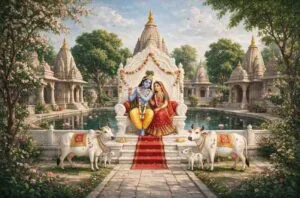
Janmashtami 2026 San Francisco: Temple Events, Puja Time & Bay Area Guide
If you’ve ever done Janmashtami in the Bay Area, you already know the “real” challenge isn’t devotion—it’s geography. A midnight aarti sounds simple until you realize your favorite temple is 45–90 minutes away, parking fills up, and your child falls asleep right as the kirtan peaks. Add early work meetings, school the next day, and Bay Area traffic that can surprise you even late at night, and it makes sense why so many people search Janmashtami 2026 San Francisco weeks in advance.
This guide is built for Hindu families, ISKCON devotees, Indian Americans, Nepalese families, and the Bay Area tech community who want one clear plan for Janmashtami 2026 San Francisco: the expected date(s), how to confirm your exact Nishita (midnight) puja time for San Francisco and surrounding cities, what temple programs usually look like here, and how to choose the best celebration style—ISKCON kirtan nights, large community temple programs, cultural hall events, or a calm home midnight aarti.
You’ll also get a practical fasting guide, what to carry for a long night program, Bay Area transit/parking tips, and a simple home puja backup that works even if you live in a small apartment.
Janmashtami 2026 San Francisco: Quick Date, Puja Time & Best Arrival Window (Save This)
Janmashtami 2026 San Francisco quick answer (featured snippet format)
Here’s the fastest planning snapshot for Janmashtami 2026 San Francisco:
- Expected Janmashtami in the Bay Area: Wednesday, 2 September 2026 or Thursday, 3 September 2026 (varies by tithi rules and temple tradition)
- Most important worship moment: Nishita Kaal (around local midnight in San Francisco / Bay Area)
- Best arrival time for midnight aarti programs: 8:30–10:00 pm (earlier is better in the Bay Area)
- Best family strategy: early evening darshan + home midnight aarti if kids can’t stay up
- Best way to confirm the correct night: check Bay Area tithi/Nishita timing + your temple’s official schedule post
To verify Ashtami tithi, Nishita time, and parana time for San Francisco (set location to San Francisco, CA):
To find ISKCON centers in the Bay Area (and check their Janmashtami posters when posted):
Important: Janmashtami 2026 San Francisco is tithi-based (Hindu lunar timing). So it’s normal for different Bay Area temples to celebrate on different nights. Follow the venue you’re attending and align your personal worship to your local Nishita window.
Why Janmashtami 2026 San Francisco Can Fall on Two Different Nights
First, Janmashtami is decided by tithi, not your calendar app
Janmashtami 2026 San Francisco is observed on Krishna Paksha Ashtami (the 8th lunar day of the dark fortnight). Many traditions emphasize the night when Ashtami is present at midnight—because Krishna’s appearance is celebrated at night.
Additionally, when Ashtami overlaps two nights, different communities handle the “which night is best” rule slightly differently.
Bay Area reality: Pacific time and daylight saving affects the “night”
In early September, San Francisco is typically on Pacific Daylight Time (PDT). That matters because:
- your local midnight is different from New York, Texas, or India
- lunar tithi boundaries shift by location
- a poster forwarded from another city may be correct for them and wrong for you
Therefore, for Janmashtami 2026 San Francisco, don’t plan from a generic “USA date” graphic. Plan from your local tithi and your temple’s official schedule.
The 2-minute method to confirm the correct night for your Bay Area city
To confirm Janmashtami 2026 San Francisco timing accurately:
- Open: https://www.drikpanchang.com/festivals/janmashtami/krishna-janmashtami-date-time.html
- Set location to San Francisco, CA (or your city: Fremont, San Jose, Sunnyvale, etc.).
- Note:
- Ashtami tithi start/end
- Nishita Kaal (midnight window)
- Parana time (fast-breaking time)
Additionally, once you know your city’s Nishita window, you can compare any event poster and check whether their midnight aarti aligns.
Janmashtami 2026 San Francisco Puja Time: Nishita (Midnight) Aarti, Abhishek & Parana
What is Nishita Kaal (simple explanation)?
Nishita Kaal is the midnight window linked with Krishna’s appearance. In most Bay Area Janmashtami programs, everything builds toward this moment.
During Janmashtami 2026 San Francisco, Nishita is usually when you’ll see:
- midnight aarti
- the strongest kirtan “peak”
- sometimes abhishek (depending on temple style and crowd size)
- special prasadam after midnight at many venues
In plain language: Nishita is the moment you planned the whole night for.
Approximate midnight aarti window in San Francisco (planning guide)
For Janmashtami 2026 San Francisco, a safe planning window is:
- Main midnight focus: roughly 11:30 pm – 12:30 am (Bay Area local time)
- Peak moment: around 12:00 am
However, exact minutes change year to year. Confirm exact Nishita timing for your location using the panchang link above.
Best time to arrive (Bay Area reality, not ideal theory)
If you want the midnight aarti experience, arriving late is the fastest way to miss it.
For Janmashtami 2026 San Francisco, use this arrival rule:
- Best arrival: 8:30–9:45 pm
- Still workable: 9:45–10:15 pm
- High-stress zone: after 10:30 pm
Bay Area truth: even “late-night traffic” can spike near major events, and parking at popular temples fills early. Arriving early is not over-planning—it’s protecting your devotional attention.
Parana (breaking the fast): don’t guess
Parana time depends on tithi and location. For Janmashtami 2026 San Francisco, confirm parana time using your city location setting here:
Where to Celebrate Janmashtami 2026 San Francisco (Bay Area Temple Event Listing Style)
The Bay Area doesn’t have one “central” temple location. Instead, your Janmashtami plan is usually shaped by which direction you live:
- San Francisco / Peninsula
- East Bay
- South Bay
- Tri-Valley
- North Bay (smaller community pockets)
Below is an event-listing style guide for Janmashtami 2026 San Francisco and the wider Bay Area. Exact 2026 schedules are posted closer to the festival, so this section focuses on what to expect and who each option suits best, plus how to find the official schedule quickly.
ISKCON Janmashtami 2026 San Francisco (Bay Area): Kirtan-Led, Midnight-Focused
If you’re searching Janmashtami 2026 San Francisco and you specifically want the ISKCON vibe—deep kirtan, steady chanting, strong midnight focus—start with ISKCON centers in the Bay Area.
What an ISKCON-style Janmashtami night usually includes:
- long Hare Krishna maha-mantra kirtan blocks (call-and-response)
- Krishna-katha (short talk/story/reading)
- a clear build-up toward midnight
- midnight aarti energy that feels intense and joyful
- prasadam after the peak moment
Who it’s best for:
- ISKCON devotees and Hare Krishna followers
- students and young professionals who want the late-night kirtan mood
- newcomers who prefer a guided program flow (sit, chant, listen, follow)
How to find the right ISKCON center near you (Bay Area):
Use the official directory and filter by city/region:
Personal Bay Area observation: ISKCON programs tend to feel “easier” late at night because kirtan holds your attention. If you struggle with waiting, kirtan-centered nights can make midnight come faster than expected—provided you arrive early enough to settle in.
East Bay Options (Fremont, Union City, Hayward, Oakland, Berkeley): Big Community, Strong Temple Culture
For many families, the East Bay is where Janmashtami 2026 San Francisco becomes practical: easier parking than the city, larger venues, and a lot of community-driven volunteer energy.
What East Bay Janmashtami programs usually look like
- decorated Krishna shrine (jhanki)
- bhajans and/or kirtan sets
- Krishna Janma katha storytelling
- aarti (sometimes multiple times: evening + midnight)
- prasadam distribution (expect a line at peak)
Best for:
- families who want early-evening darshan
- devotees who want a large community atmosphere
- elders who need easier entry and parking
How to pick a venue in the East Bay:
- If you want midnight: confirm the program runs late and arrive early.
- If you want “kids-friendly”: go early and leave before the midnight rush, then do home midnight aarti.
South Bay Options (San Jose, Sunnyvale, Santa Clara, Mountain View, Cupertino, Milpitas): The Tech-City Janmashtami
If you’re searching Janmashtami 2026 San Francisco from the South Bay, you probably want a plan that fits:
- work the next day
- long drives
- family logistics
- crowded but well-organized temple ecosystems
What South Bay Janmashtami programs typically emphasize
- strong family attendance early evening
- cultural items at some venues (kids’ dance, drama)
- kirtan leading toward midnight at midnight-focused programs
- prasadam lines that move steadily with volunteers
Best for:
- tech professionals (start early, plan exit)
- families who want cultural programs for kids
- devotees who prefer suburban campus-style venues
South Bay timing tip: If you’re driving from one South Bay city to another, treat it like commuting. That means leaving earlier than you think—especially on festival nights.
Peninsula & San Francisco Proper: Smaller Spaces, Transit-Friendly, Plan Your Return Early
San Francisco and the Peninsula can be very convenient for transit, but crowded venues can also feel tighter in space.
What to expect for Janmashtami 2026 San Francisco in city/peninsula-style programs
- smaller or mid-sized halls
- strong participation but limited seating
- easier access for those using public transit
- earlier programs in some venues to match working-family schedules
Best for:
- people who prefer transit over driving
- students and young professionals living in the city
- devotees who want a shorter, focused program
Reality check: If you’re staying past midnight, plan your return route before you go. Late-night transit frequency changes.
For BART schedules and service updates:
For SFMTA (Muni) info and trip planning:
For Caltrain schedules (useful for Peninsula travel):
Tri-Valley (Dublin, Pleasanton, Livermore, San Ramon): Space, Parking, “Temple Campus” Feel
Tri-Valley is a common “meet in the middle” region for Bay Area families. For Janmashtami 2026 San Francisco, this region can be ideal if you want:
- bigger temple campuses
- easier parking
- more space for kids and elders
What you can expect:
- early evening family-heavy crowds
- long darshan lines at peak times
- volunteers managing crowd flow and prasadam distribution
- cultural programs at some venues
Best for:
- families traveling from both East Bay and South Bay
- elders who need easier movement and parking
- devotees who want a large festival atmosphere
North Bay (San Rafael, Santa Rosa, etc.): Smaller Gatherings, Strong Home Satsang Culture
If you’re searching Janmashtami 2026 San Francisco from the North Bay, your options may be:
- smaller community programs
- home satsangs
- traveling to East Bay/South Bay temple hubs
Best approach:
- attend a local early program if available
- do a calm home midnight aarti
- plan a weekend temple darshan if you can’t do the midnight travel
Contrarian truth: in the Bay Area, the most devotional Janmashtami is often the one where you don’t exhaust yourself driving at 12:30 am. Sometimes the “best” plan is early darshan + home Nishita aarti with full attention.
What a Typical Janmashtami 2026 San Francisco Event Schedule Looks Like (Timing Blocks)
Even when temples don’t publish a detailed timetable early, most Janmashtami 2026 San Francisco programs follow the same rhythm. Knowing this helps you plan transport, fasting energy, and kids’ comfort.
Block 1: Early evening (family-friendly, calm darshan)
What usually happens:
- darshan and jhanki viewing
- lighter bhajans
- kids in Krishna/Radha dress (most common early)
- easier parking and entry
Best for: families with toddlers, elders, and first-time visitors.
Block 2: Evening build-up (katha + deeper kirtan)
What usually happens:
- Krishna Janma katha (story/talk)
- stronger kirtan sets
- cultural performances at some venues (especially in suburban halls/temples)
Additionally, this is the best time to decide: are we staying to midnight or leaving early? Don’t wait until 11:30 pm to decide.
Block 3: Midnight peak (Nishita focus)
What usually happens:
- continuous chanting toward midnight
- midnight aarti
- possible abhishek (format depends on venue)
- prasadam distribution after midnight
Therefore, if you want the full midnight experience, arrive early enough to settle your mind before this block begins.
The One Mistake That Ruins Janmashtami 2026 San Francisco (Even at the Best Venues)
People find a great venue for Janmashtami 2026 San Francisco, then arrive at 11:40 pm.
That’s the mistake.
What happens when you arrive late:
- you spend the Nishita window in parking and entry stress
- you can’t find space to sit or stand calmly
- kids get restless because you’re still moving
- you miss the emotional build-up of kirtan
Therefore, if midnight aarti matters, arrive 8:30–10:00 pm (depending on your drive distance). Early arrival is not a lifestyle choice—it’s the difference between devotion and distraction.
Janmashtami 2026 San Francisco for Families: Plans That Actually Work
Toddlers and preschoolers: the “two-part Janmashtami” plan
For Janmashtami 2026 San Francisco with small kids, this is the plan that saves parents every year:
- Go to temple early evening (darshan + photos + one bhajan/kirtan)
- Come home for bedtime as usual
- Parents do a short home midnight aarti (or join an online kirtan if available)
It keeps the festival joyful instead of exhausting.
Primary school kids: make them helpers, not just attendees
Kids stay engaged when they have a role. For Janmashtami 2026 San Francisco, let them:
- help plate fruit for bhog
- clap and sing one chorus (simple and repeatable)
- hear a 3-minute Krishna birth story
- ring a small bell gently during home aarti
Additionally, don’t force them to stay awake for midnight if they’re falling apart. One calm year builds love; one forced year builds resentment.
Teens and college students: kirtan + seva is the best combination
For teens, Janmashtami becomes meaningful when it’s participatory:
- attend kirtan with friends
- volunteer (seva) for prasadam serving, shoe area, or crowd guidance
- help elders and families find seating
Therefore, Janmashtami 2026 San Francisco becomes community identity, not just family tradition.
Grandparents: comfort is devotion too
For elders:
- early evening darshan is often the best experience
- long late-night sitting can be hard
- late-night driving can be riskier than staying home
A respectful plan:
- early darshan + bhajans
- home satsang + bhog
- optional short midnight chant only if comfortable
Fasting Guide for Janmashtami 2026 San Francisco (Phalahar, One-Meal, Nirjala)
Many people searching Janmashtami 2026 San Francisco also want fasting guidance that works with Bay Area life—commutes, office schedules, and late-night driving.
Choose a fasting style you can safely maintain
Common fasting options:
- Phalahar: fruit + दूध (milk) + yogurt + nuts + makhana
- Water-only fast: manageable for some adults
- One satvik meal: practical for beginners and busy workers
- Nirjala: traditional, but not safe for everyone
If you have health conditions, choose safety first. Devotion is not measured by dehydration.
Phalahar food list (easy Bay Area grocery run)
Keep it simple:
- bananas, apples, grapes
- milk, yogurt
- nuts (almonds, cashews)
- makhana (fox nuts)
- sabudana (tapioca) if you cook it
- potatoes and peanuts (depending on your tradition)
Additionally, if you’re driving late, don’t choose a fasting style that makes you dizzy. Safety is also dharma.
Parana (fast-breaking) for Janmashtami 2026 San Francisco
Parana depends on tithi and location. Confirm it using the San Francisco location setting here:
Home Puja for Janmashtami 2026 San Francisco (Apartment-Friendly, Simple, Complete)
If you can’t make a temple event, or you choose to do midnight at home, this is a complete way to celebrate Janmashtami 2026 San Francisco without stress.
Minimum items you need
- Krishna photo/murti (Bal Krishna, Laddu Gopal, or your family’s form)
- diya (or electric diya if you prefer)
- clean cloth + small plate
- one bhog item (fruit is enough)
Step-by-step Janmashtami home puja (numbered)
- Clean a small space and wash hands/face (or bathe if possible).
- Place Krishna photo/murti on a clean cloth.
- Light a diya and sit quietly for 30 seconds.
- Chant one:
- Om Namo Bhagavate Vasudevaya (11 times), or
- Hare Krishna Mahamantra (5–15 minutes)
- Read a short Krishna birth story (2–5 minutes).
- Offer bhog (fruit, kheer, makhan-mishri).
- Near midnight (Nishita), do a short aarti:
- wave the diya 3–7 times
- sing “Nand ke anand bhayo” or one bhajan
- Share prasadam and end with gratitude.
Bay Area practical tip: if you’re in an apartment with noise-sensitive neighbors, keep midnight singing soft. Devotion doesn’t require volume—attention is the main offering.
Easy bhog ideas (satvik-friendly, U.S. grocery accessible)
- fruit plate
- kheer (milk + rice + sugar + cardamom)
- makhan-mishri (unsalted butter + rock sugar)
- panjiri (atta roasted in ghee + sugar + nuts)
- roasted makhana
Bhajans and Kirtan for Janmashtami 2026 San Francisco (What to Sing)
A simple set list makes your home celebration easy and makes temple participation feel familiar.
Recommended for Janmashtami 2026 San Francisco:
- Hare Krishna Mahamantra (great “base” kirtan)
- “Nand ke anand bhayo” (perfect near midnight)
- “Govinda Jai Jai, Gopala Jai Jai”
- “Achyutam Keshavam”
- “Shri Krishna Govind Hare Murari”
- “Yashomati Maiya Se Bole Nandlala” (kids love it)
Additionally, repeating fewer bhajans with feeling is better than rushing through a long list.
What to Bring to Janmashtami 2026 San Francisco Temple Nights (So You Last Till Midnight)
Pack small but smart for Janmashtami 2026 San Francisco:
- Socks (temple floors can feel cool, especially with A/C)
- light jacket/shawl (late-night exit can cool down)
- phone power bank
- wet wipes/tissues
- small mat for sitting (if your venue allows)
- water bottle (if your fasting style allows)
- quiet activity for kids (book, beads, coloring)
Additionally, if your child wears Krishna dress early, bring comfortable backup clothes. Costumes are cute at 7 pm and uncomfortable at 11:30 pm.
Transit, Parking & Bay Area Logistics (Don’t Let the Commute Eat Your Nishita)
The Bay Area “late-night exit” reality
After midnight aarti, a lot of people leave at once. That creates:
- parking lot traffic
- rideshare surge pricing
- crowded transit platforms (depending on location)
Therefore, for Janmashtami 2026 San Francisco, consider:
- leaving 15–30 minutes after the peak rush
- or staying for a bit of post-midnight prasadam and letting the crowd thin
Useful transit links (plan your return before you go)
- BART: https://www.bart.gov/
- SFMTA (Muni): https://www.sfmta.com/
- Caltrain: https://www.caltrain.com/
Additionally, if you’re driving across bridges late at night, remember that traffic patterns can still surprise you near event venues.
Seva (Volunteering) in the Bay Area: The Fastest Way to Feel Connected
If you’re new to a Bay Area temple community, seva is the quickest way to feel like you belong during Janmashtami 2026 San Francisco.
Common seva roles:
- shoe area support
- ushering / crowd guidance
- prasadam serving
- cleanup
- helping elders find seating
To locate your nearest ISKCON center (and ask about Janmashtami seva):
A simple message that works: “Hare Krishna, I’d like to do Janmashtami seva. Who should I contact?”
Key Statistics (Why Bay Area Janmashtami Events Keep Growing)
Bay Area Janmashtami crowds aren’t random. The region has one of the largest concentrations of Indian-origin residents in the U.S., and participation grows as communities expand and organize more programs.
- U.S. Census/ACS tools show the Asian Indian population is in the millions nationwide, supporting strong festival attendance in major metros like the Bay Area.
- Major metro regions with strong tech employment attract ongoing migration, which increases turnout at temple festivals year over year.
Source (official U.S. data portal):
Therefore, for Janmashtami 2026 San Francisco, planning early isn’t overthinking—it’s the difference between a peaceful night and a rushed one.
Read this also :
- Janmashtami 2026 New York: Temple Events, Puja Time & Fasting Guide
- Janmashtami 2026 Los Angeles: Temple Events, Puja Time & Celebration Guide
- Janmashtami 2026 Chicago: Temple Events, Puja Time & Fasting Guide
- Janmashtami 2026 Houston: Temple Events, Puja Time & Fasting Guide
- Janmashtami 2026 Dallas: Temple Events, Puja Time & DFW Guide
Janmashtami 2026 San Francisco Checklist (Screenshot This)
Use this the day before Janmashtami 2026 San Francisco:
- Confirm San Francisco (or your city) Ashtami tithi + Nishita window
- Confirm your venue’s program night (Wed or Thu)
- Decide: midnight temple or early darshan + home midnight
- Pack socks, shawl, power bank, wipes
- Plan your return route (BART/Muni/Caltrain/drive)
- Choose your fasting level and prep phalahar foods
- Decide the kid plan: stay to midnight vs leave early
Additionally, message one friend: “What time are you reaching?” Clear coordination saves your night.
FAQ: Janmashtami 2026 San Francisco
1) What is the date for Janmashtami 2026 San Francisco?
Janmashtami 2026 San Francisco is expected to be observed on Wednesday, 2 September 2026 or Thursday, 3 September 2026, depending on local tithi timing and the temple tradition you follow. Confirm with a San Francisco-location panchang and your temple’s official schedule.
2) What time is midnight aarti (Nishita) for Janmashtami 2026 San Francisco?
Nishita is around local midnight in the Bay Area, often within a broader window of roughly 11:30 pm to 12:30 am. Confirm exact minutes by setting location to San Francisco here:
https://www.drikpanchang.com/festivals/janmashtami/krishna-janmashtami-date-time.html
3) Where can I find ISKCON Janmashtami events near San Francisco?
Use the official ISKCON directory to locate Bay Area centers and check their Janmashtami schedule posts closer to the date:
https://www.iskcon.org/temples/
4) What time should I arrive for a midnight aarti program in the Bay Area?
For Janmashtami 2026 San Francisco, aim to arrive 8:30–10:00 pm depending on your travel distance. Arriving after 10:30 pm often means you spend key moments in parking and entry lines.
5) Is Janmashtami 2026 San Francisco suitable for kids?
Yes, with a plan. Many families attend an early evening program (darshan + bhajans) and do a short home midnight aarti after kids sleep. This keeps Janmashtami joyful and realistic.
6) What can I eat during Janmashtami fasting in the Bay Area?
Many devotees follow phalahar: fruit, milk/yogurt, nuts, makhana, and sabudana dishes (depending on tradition). Choose a fasting level that fits your health and schedule—especially if you’re driving late.
7) What if I can’t make it to a temple program in San Francisco or the Bay Area?
Do a simple home puja: diya (or electric diya), chant the Hare Krishna mantra or “Om Namo Bhagavate Vasudevaya,” read a short Krishna birth story, offer fruit, and do aarti near midnight if possible. It’s a complete Janmashtami.
Conclusion (with CTA)
A peaceful Janmashtami 2026 San Francisco plan comes down to three decisions: confirm the correct night using Bay Area tithi timing, protect the Nishita (midnight) moment by arriving early, and choose a celebration style that fits your family—full midnight temple, early darshan plus home midnight aarti, or home-only when life is busy. The Bay Area gives you incredible options across SF, the Peninsula, East Bay, South Bay, and Tri-Valley, but the best choice is always the one that keeps your mind calm enough to actually remember Krishna.
Share this guide with your Bay Area group chat, and comment below: Which part of the Bay are you coming from (SF, Peninsula, East Bay, South Bay, Tri-Valley), and where are you celebrating Janmashtami 2026 San Francisco this year?