Rakhi 2026 in the UK falls on 27 Aug (BST), not 28 Aug. Learn why the date shifts from India, how tithi works, and when to tie your rakhi.
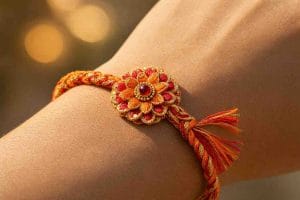
Rakhi 2026 in the UK: Is It 27 Aug or 28 Aug? (Time Zone + Tithi Explained)
Every single year, the same argument breaks out in my family WhatsApp group. My mum in Leicester says one date. My cousin in Delhi swears by another. My sister in Birmingham forwards a screenshot from some random Instagram page that contradicts both of them. And suddenly, a festival that’s supposed to be about love and protection turns into a full-blown calendar debate.
If you’re reading this, you’ve probably already seen two different dates floating around for Rakhi 2026 in the UK—Thursday, 27 August and Friday, 28 August—and you just want a straight answer.
Here it is: for most UK-based panchang calculations, Rakhi 2026 in the UK falls on Thursday, 27 August 2026 (BST).
But I’m not going to just throw a date at you and walk away, because that’s exactly how this confusion keeps happening year after year. The reason the date differs from India is genuinely interesting, and once you understand it, you’ll never have to argue about it again.
In this guide, I’ll walk you through:
- Why the UK date is 27 August while India celebrates on 28 August
- How the BST–IST time difference literally shifts the calendar day
- What a tithi actually is (explained without the astrology textbook jargon)
- The Bhadra kaal factor that adds another layer of confusion
- Practical tips for celebrating Rakhi in the UK without the last-minute chaos
- A simple way to verify the date yourself for any UK city
Let’s get into it.
The Short Answer: Why Two Dates Exist (And Neither Is “Wrong”)
Rakhi 2026 in the UK is 27 August (BST). Rakhi 2026 in India is 28 August (IST). Both dates come from the exact same lunar event—Shravan Purnima, the full moon day in the Hindu month of Shravan.
So how can the same full moon produce two different dates?
Because Hindu festivals are tied to tithi (lunar day), not to the Gregorian calendar date on your iPhone. And a tithi doesn’t care about national borders or time zones. It starts and ends at precise astronomical moments that look completely different depending on where you’re standing on the planet.
Think of it this way: if a cricket match starts at 11:30 PM in London on Thursday, it’s already 4:00 AM Friday in Mumbai. Same match. Same moment. Different day on the calendar.
That’s exactly what’s happening with Shravan Purnima in 2026.
Understanding Tithi: The Concept That Clears Everything Up
What is a tithi, really?
A tithi is a lunar day based on the angular relationship between the Sun and the Moon. It’s not a neat 24-hour block from midnight to midnight like the days on your wall calendar.
Instead, a tithi:
- Begins at an exact astronomical moment (down to the minute)
- Ends at another exact astronomical moment
- Can last anywhere from roughly 19 to 26 hours
- Can start at 3 AM and end at 11 PM the same day, or start at 9 PM and end at 5 PM the next day
This is the single most important thing to understand about Rakhi 2026 in the UK and every other Hindu festival date confusion you’ve ever encountered.
Why tithi matters more than the date on your phone
The Gregorian calendar is a solar calendar. It’s tidy, predictable, and completely disconnected from the Moon’s phases. The Hindu calendar (Panchang) is lunisolar. It tracks both the Sun and the Moon, which means its “days” don’t line up neatly with Monday-through-Sunday.
So when someone asks “What date is Rakhi 2026 in the UK?”, the real question underneath is: “On which Gregorian date does the Shravan Purnima tithi fall during UK daytime hours?”
And the answer, for 2026, is 27 August.
The Time Zone Math: How 4.5 Hours Flips the Calendar
BST vs IST during August
During August, the UK operates on British Summer Time (BST), which is UTC + 1. India operates on Indian Standard Time (IST), which is UTC + 5:30 year-round (India doesn’t observe daylight saving time).
That means India is 4 hours and 30 minutes ahead of the UK throughout August.
How this creates the date shift for Rakhi 2026
Shravan Purnima tithi in 2026 begins and ends at specific universal moments. When you convert those moments to local time:
- In the UK (BST): The Purnima tithi is active during the daytime and evening of Thursday, 27 August 2026
- In India (IST): Because India’s clock is 4.5 hours ahead, that same tithi extends into Friday, 28 August 2026
Here’s a simplified illustration to make it concrete. Let’s say (for explanation purposes) the Purnima tithi:
- Ends at 7:00 PM BST on 27 August in London
- That same moment is 11:30 PM IST on 27 August in Delhi
Now, if the tithi actually ends a few hours later:
- It might end at 10:00 PM BST on 27 August (still Thursday in the UK)
- But that’s 2:30 AM IST on 28 August (already Friday in India)
This is why Indian panchangs often mark 28 August while UK panchangs mark 27 August. The tithi is the same. The local clock is different.
Key takeaway: The date on your calendar is a human convention. The tithi is an astronomical reality. Always follow the tithi for your local time zone.
The Sunrise Rule: Why Your City in the UK Matters
Hindu festivals and local sunrise
Most traditional Hindu festival calculations don’t just look at when a tithi starts and ends. They also consider which tithi is prevailing at sunrise in your specific location.
This is called the Udaya Tithi rule—the tithi that is active at the moment the Sun rises at your location is generally considered the tithi “of that day” for festival purposes.
Does this change anything within the UK?
The UK is a single time zone, which makes things simpler than, say, the US (where East Coast and West Coast can sometimes land on different dates for the same tithi). However, sunrise times do vary between:
- London (southeast, earlier sunrise in August)
- Edinburgh (much further north, noticeably different sunrise)
- Belfast (further west, slightly later sunrise)
- Birmingham, Leicester, Manchester (central, moderate variation)
For Rakhi 2026 in the UK, the sunrise variation across the country is unlikely to flip the date from 27 to 28 August. But it can shift the recommended muhurat (auspicious time window) by 15–30 minutes.
How to check for your specific city
The most reliable method is to use a panchang calculator that lets you input your exact location:
Set your city to London, Birmingham, Leicester, Glasgow, or wherever you are. Navigate to August 2026. Look for Raksha Bandhan or Shravana Purnima. The date and muhurat shown will be calculated for your local sunrise and time zone.
The Bhadra Kaal Factor: The Other Reason People Get Confused
What is Bhadra (Vishti Karana)?
If you’ve grown up in a North Indian household, you’ve almost certainly heard the rule: “Don’t tie rakhi during Bhadra.”
Bhadra (also called Vishti Karana) is a specific period within the Panchang that is traditionally considered inauspicious for certain rituals, including rakhi tying. It’s one of the eleven karanas (half-tithi segments) in the Hindu calendar, and it occurs periodically throughout every lunar month.
Why Bhadra makes the Rakhi date debate even messier
Here’s where it gets tricky for Rakhi 2026 in the UK:
- Bhadra timings are also calculated astronomically, which means they shift when you change time zones
- In some years, Bhadra falls during the daytime on Purnima, which pushes the recommended rakhi-tying window to after Bhadra ends (often late evening or even the next morning)
- If Bhadra ends very late on 27 August (BST), some families might push their celebration to the morning of 28 August anyway—creating the impression that “Rakhi is on the 28th”
What should you actually do?
If your family follows Bhadra rules strictly:
- Check the Bhadra start and end times for your UK city on 27 August 2026
- Tie rakhi after Bhadra ends (the window is usually clearly marked on panchang sites)
- If Bhadra ends late in the evening, a post-Bhadra rakhi ceremony at 8 or 9 PM on 27 August is perfectly valid
If your family doesn’t follow Bhadra rules:
- Tie rakhi at any convenient time during Purnima tithi on 27 August
- Don’t overthink it
Honest opinion: I’ve seen families stress about Bhadra timings so much that they end up tying rakhi at midnight, exhausted and irritable. Lord Shiva isn’t checking your spreadsheet. Do your best with the information you have, and keep the spirit of the festival intact.
Why Many UK Families Celebrate on 28 August Anyway (And That’s Okay)
Let’s be real for a moment. Even after all this tithi and time zone explanation, a large number of UK Hindu families will celebrate Rakhi 2026 in the UK on 28 August. Not because they’ve calculated the panchang incorrectly, but because of practical, human reasons.
Common reasons families choose the India date:
- Family in India is celebrating on the 28th, and you want to video-call during their ceremony
- The local mandir or community centre has booked their Raksha Bandhan event for the weekend closest to the India date
- Your family priest (panditji) follows an India-based panchang and has advised the 28th
- It’s a Friday, which is easier for some people to take off work than a Thursday
- Tradition inertia—your family has always followed the India date, and changing it feels unnecessary
None of these reasons are “wrong.” Hinduism has always accommodated regional and familial variations. The smriti texts themselves acknowledge that customs differ by desh (region), kaal (time), and paatra (individual circumstance).
A practical compromise that works beautifully
If you’re torn between the two dates, here’s what I’ve seen work well for UK families:
- 27 August (Thursday, BST): Tie rakhi at home with siblings who are physically present. Follow the local UK tithi. Do a small puja, exchange sweets, keep it intimate.
- 28 August (Friday, IST-aligned): Do a big video call with siblings and cousins in India. Send digital gifts. Post your rakhi photos. Celebrate the social side of the festival.
This way, you honour the astronomical accuracy and the family connection. Nobody loses.
Rakhi 2026 in the UK: Practical Planning Guide
Sending rakhis internationally (start early)
If you have brothers in India, the US, Canada, or Australia, do not wait until mid-August to post rakhis. International shipping from the UK in late summer can be unpredictable due to:
- Royal Mail seasonal delays
- Customs processing times (especially for parcels containing sweets or food items)
- Weekend delivery gaps
My recommendation: Send international rakhis by 10–12 August 2026 at the latest. Use tracked shipping. Don’t rely on standard international for time-sensitive deliveries.
Buying rakhis in the UK
If you’re buying locally, the best options for Rakhi 2026 in the UK include:
- Indian grocery stores in areas like Southall, Wembley, Leicester (Belgrave Road), Birmingham (Soho Road), and Bradford
- Online UK-based Indian stores that stock rakhis, puja thalis, and mithai
- Amazon UK and Etsy UK (surprisingly good for designer and personalised rakhis)
- Local mandir shops (often the most affordable and traditional options)
Planning the puja thali
A basic Raksha Bandhan puja thali in the UK typically includes:
- Rakhi (obviously)
- Roli (red vermillion) and chawal (rice grains)
- A small diya (tea light works fine)
- Sweets (barfi, laddoo, or whatever your brother actually likes)
- A coconut or dry fruits (optional)
- A small amount of water in a lota or cup
You don’t need an elaborate setup. Sincerity matters more than aesthetics.
If you’re celebrating at a UK mandir
Many temples across the UK host Raksha Bandhan events. A few things to keep in mind:
- Check the event date early. Temples often schedule their celebration on the nearest weekend for convenience, which may not match the exact tithi date
- Arrive early if you want a good spot, especially at popular mandirs in Leicester, London, and Birmingham
- Bring your own rakhi if you have a specific preference; temple-provided rakhis are usually simple
- Parking can be a nightmare near popular temples on festival days—consider public transport
Key Statistics That Put UK Rakhi Celebrations in Context
Understanding the scale of the UK Hindu community helps explain why Raksha Bandhan has become such a visible celebration across British cities.
- The Hindu population in England and Wales reached approximately 1.03 million in the 2021 Census, making it one of the fastest-growing religious communities in the UK. Source: Office for National Statistics – Religion, England and Wales: Census 2021
- Leicester is one of the most ethnically diverse cities in the UK, with a significant Indian-origin population that drives major Hindu festival celebrations including Raksha Bandhan. Source: Leicester City Council – Census 2021 Data
- British Summer Time (BST) is UTC+1, creating a 4.5-hour gap with IST that directly affects Hindu festival date calculations for the UK diaspora. Source: UK Government – British Summer Time guidance
These numbers tell you something important: you are not a tiny minority trying to keep traditions alive in isolation. The UK has a massive, vibrant Hindu community, and festivals like Raksha Bandhan are celebrated openly and joyfully across the country.
The Surprising History: How Raksha Bandhan Became a UK Festival
Most people think of Raksha Bandhan as a private family affair. But in the UK, it’s gradually becoming a public cultural event—and that shift is worth noticing.
In cities like Leicester and Birmingham, local councils now acknowledge Raksha Bandhan alongside Diwali and Holi. Schools with large South Asian student populations often host rakhi-making workshops in late August. Some community centres even organise “rakhi for neighbours” events that invite non-Indian residents to participate.
This is a relatively recent development. Twenty years ago, most UK Hindu families celebrated Rakhi quietly at home. Today, it’s increasingly visible in the public calendar.
Why does this matter for your 2026 planning? Because the growing public profile means more community events, more commercial options for rakhis and gifts, and more awareness of the date confusion. You’re more likely to see “Rakhi 2026” banners in shops and social media feeds, which is both helpful and confusing when the dates don’t match.
How to Verify the Rakhi 2026 UK Date Yourself (3-Minute Method)
I don’t want you to just take my word for it. Here’s how you can independently confirm the date for Rakhi 2026 in the UK in under three minutes:
- Go to Drik Panchang
- Set your location to your UK city (London, Birmingham, Leicester, Manchester, Glasgow, etc.)
- Navigate to August 2026 in the calendar section
- Look for “Raksha Bandhan” or “Shravana Purnima” in the festival list
- Note the date and muhurat displayed—these will be calculated for BST and your local sunrise
If you want a second opinion, you can cross-check the full moon timing using a non-religious astronomical source:
- TimeandDate.com – Moon Phases Calendar (set your city and check the August 2026 full moon date and time in BST)
If the full moon peaks on 27 August in BST, that confirms the Shravan Purnima tithi is active on that date in the UK.
Helpful Links
- Rakhi 2026 Time in New York (EDT): Shubh Muhurat + Bhadra End Time
- Rakhi 2026 Time in Seattle (PDT): Auspicious Timing + Simple Puja Steps
- Rakhi 2026 Time in Chicago (CDT): Shubh Muhurat + Bhadra Timing
- Raksha Bandhan 2026 UK Date: Why It’s August 27 (BST), Not August 28
FAQ: Rakhi 2026 in the UK (Your Most Common Questions)
1) What is the correct date for Rakhi 2026 in the UK?
For most UK-based panchang calculations, Rakhi 2026 in the UK falls on Thursday, 27 August 2026 (BST). This is because the Shravan Purnima tithi is active during UK daytime hours on that date.
2) Why do Indian websites say Rakhi is on 28 August 2026?
Because India is 4 hours 30 minutes ahead of the UK during BST. The same Purnima tithi that falls on 27 August in the UK extends into 28 August in India (IST). Indian panchangs calculate dates based on Indian sunrise and local time, so they show 28 August.
3) Is it religiously incorrect to celebrate Rakhi on 28 August in the UK?
It depends on your tradition. Strictly speaking, following your local tithi (27 August for the UK) is the most accurate approach. However, many families celebrate on the India date for practical reasons, and this is widely accepted. Hinduism accommodates regional variation.
4) Does the Rakhi date change depending on which UK city I’m in?
The date is unlikely to change between UK cities because the entire country shares one time zone (BST). However, the muhurat (auspicious time window) may shift by 15–30 minutes between, say, London and Edinburgh due to sunrise differences.
5) What is Bhadra kaal, and how does it affect Rakhi timing?
Bhadra (Vishti Karana) is a period considered inauspicious for rakhi tying in many North Indian traditions. If Bhadra falls during Purnima daytime, the recommended rakhi-tying window shifts to after Bhadra ends. Check your local UK panchang for exact Bhadra timings on 27 August 2026.
6) My brother is in India and I’m in the UK. When should we celebrate?
A practical approach: tie rakhi in the UK on 27 August (BST) following local tithi, then do a video call on 28 August (IST) when your brother’s family is celebrating. This honours both the astronomical accuracy and the family connection.
7) Where can I buy rakhis in the UK for 2026?
You can buy rakhis at Indian grocery stores in Southall, Wembley, Leicester, Birmingham, and Bradford. Online options include UK-based Indian stores, Amazon UK, and Etsy UK. Start shopping by early August for the best selection.
Conclusion: Stop Arguing, Start Celebrating
The confusion around Rakhi 2026 in the UK comes down to one simple fact: Hindu festivals follow the lunar tithi, not the Gregorian calendar, and tithi shifts across time zones. In the UK (BST), Shravan Purnima falls on 27 August 2026. In India (IST), it extends into 28 August 2026. Both dates are rooted in the same astronomical event.
Before you finalise your plans, take three minutes to check a UK-location panchang. Then decide what matters most for your family—local tithi accuracy, syncing with relatives in India, or simply picking a day that works for everyone. There is no single “wrong” choice as long as the intention is genuine.
Next step: Open your panchang app or visit Drik Panchang, set your UK city, and lock in your Rakhi date and muhurat today. Then text your siblings before the WhatsApp debate starts again.
What date is your family celebrating Rakhi 2026 in the UK—and have you ever had the “27th vs 28th” argument in your family group chat? I’d love to hear your story in the comments.