Garba classes Canada 2026: traditional dance training before Navratri. City-by-city options, timelines, costs, attire, etiquette, and practice plans. Enrol smart.
Finding current Garba classes and workshops in Canada
Class schedules are often posted locally and may not appear in a single national directory. I could not verify a current public 2026 class timetable from a single Canada-wide organizer, so this guide does not invent class names, prices or addresses.
- Search official websites and social pages of Gujarati associations, Hindu temples, university South Asian clubs and local dance studios in your city.
- Ask event organizers whether they offer beginner workshops, pre-event practice sessions or family-friendly lessons before Garba nights.
- Confirm the instructor, exact venue address, dates, duration, fees, age range, footwear rules and cancellation policy before paying.
- For Vancouver-area Gujarati event discovery, consult GujaratiEvents.ca; for Toronto listings, check Eventbrite’s Toronto Garba search. These are discovery links, not proof that a particular class is available.
Beginners can start with basic two-step and three-step Garba patterns, practise to a steady beat, and learn stick spacing before joining a fast Dandiya circle. Choose a class that welcomes beginners and provides a safe practice area. For upcoming dance nights and current event listings, see Garba and Dandiya events across Canada, Toronto Navratri 2026 Garba and temple events and Vancouver Navratri 2026 events.
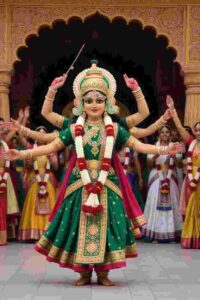
Garba Classes Canada 2026: Where to Learn Traditional Dance Before Navratri
As of October 12, 2026, Sharad Navratri is already underway, so some preparatory classes may have passed or filled. Check local dance studios, Gujarati associations, temples and university clubs for any remaining practice sessions. This guide also helps readers find training for the next festival season; class schedules and availability differ by city and instructor.
You’ll get a 9-week ramp-up syllabus, city-by-city search tips, cost and gear breakdowns, etiquette and safety, plus practice checklists you can use tonight. Whether you’re a total beginner, a cultural learner, or a returning dancer shaking off the rust, this is your all-in-one plan for traditional dance training that fits your life and budget.
- Reading time: 22–28 minutes
- Best for: Garba beginners, cultural learners, dance enthusiasts
Table of Contents
- At a Glance: Where to Learn Garba in 2026 (Featured Snippet)
- Garba 101: What You’ll Learn (and the Difference From Raas)
- How to Choose the Right Class: A Buyer’s Guide
- Your 8–9 Week Ramp-Up Plan: Beginner Syllabus
- Technique Essentials: Posture, Counts, Turns, and Dandiya Basics
- Gear & Attire: What to Wear and Bring
- City Guides: Where to Find Garba Classes in Canada
- Online & Hybrid Learning: Train From Home, Perform In-Person
- Practice Toolkit: Warm-Up, Conditioning, and Playlists
- Accessibility & Inclusivity: Low-Impact and Family Options
- Costs, Discounts, and What to Expect
- Etiquette & Safety: Circles, Space, and Photo Consent
- Key Statistics and Why They Matter
- Resources: Internal and External Links
- Checklists You Can Use Today
- Frequently Asked Questions
- Conclusion
At a Glance: Where to Learn Garba in 2026 (Featured Snippet)
Quick steps to find Garba classes Canada traditional dance training near you:
- Search local options:
- Studios: “Garba classes Canada 2026 + [city]”
- Municipal programs: city recreation portals
- Temples: workshop posts on official pages
- Universities: Indian/Gujarati student groups on Instagram
- Enrolment timing: Ask the instructor about registration deadlines and trial classes. There is no verified Canada-wide timeline, and availability varies by class.
- Choose your level: Beginner, mixed-level, or performance team.
- Budget: Drop-in $15–$25; 6–8 week sessions $120–$240; student/family discounts common.
- Bring: Water, towel, dance flats/sneakers, soft-tipped dandiya (if needed).
- For this year, Navratri is already underway as of October 12, 2026. Check providers for remaining sessions, or use the practice plan to prepare for next season.
If classes are full, build a hybrid plan: one weekly class + one online session + two home drills. Consistency beats intensity.
Garba 101: What You’ll Learn (and the Difference From Raas)
Garba is a circular folk dance from Gujarat with rhythmic claps, footwork, and turns performed in concentric rings. Raas (dandiya) is a related partner or line dance with sticks. Most beginner programs teach both.
- Garba foundations:
- Taali (2-clap) and tran-taali (3-clap) patterns
- 2-step and 4-step basics, variational turns (half, full)
- Circle flow, spacing, and tempo control
- Raas basics:
- Stick grip, tap patterns (top–side–down), partner changes (8 or 12 counts)
- Travel steps and safe stick angles
- Musical feel:
- Traditional Garba: often 120–136 BPM; accelerates gradually
- Raas: sharper accents; clear 8/12-count phrasing
No prior experience may be needed for a beginner class, but requirements vary. Regular practice can build familiarity over several weeks; progress and comfort in a live Garba circle differ by person.
How to Choose the Right Class: A Buyer’s Guide
Avoid guesswork with this simple checklist.
- Fit the format:
- Beginner series (6–8 weeks) vs. mixed-level vs. performance teams
- Group size: 10–20 is ideal for feedback without crowding
- Instructor & syllabus:
- Ask for a week-by-week outline (counts, steps, turns, raas)
- Look for technique cues (posture, knee alignment, breath)
- Demo or trial class if available
- Venue and surface:
- Wood or sprung floors are gentler than concrete
- Clear policies on footwear and water
- Schedule & location:
- Late evenings work for students; earlier for families
- Check transit access and free parking windows
- Policies:
- Make-up classes, refunds, snow-day or smoke advisory plans
- Photo/video consent; minors’ participation rules
The best class is the one you’ll attend every week. Choose location and timing you won’t skip.
Your 8–9 Week Ramp-Up Plan: Beginner Syllabus
Use this plan with any beginner class. Adjust pacing with your instructor.
- Week 1: Posture, 2-step, taali, breath; 10-minute stamina drill
- Week 2: 4-step, tran-taali, half-turns; tempo control
- Week 3: Variations (heel-toe, grapevine), arm paths; circle etiquette
- Week 4: Full turns, travel steps, entry-exit skills; 12-minute drill
- Week 5: Raas intro—stick grip, top–side–down taps; partner changes
- Week 6: Raas travel patterns; diagonal lines; 14-minute drill
- Week 7: Transitions—garba → raas → garba; musicality
- Week 8: Mock circle—outer/mid/inner rings; performance polish
- Week 9 (optional): Showcase rehearsal or video self-review; Q&A
Home practice (30–40 minutes, 2x/week):
- 7-minute warm-up (see below)
- 12–15 minutes footwork + turns
- 8–10 minutes raas taps + partner changes
- 3-minute cool-down
Technique Essentials: Posture, Counts, Turns, and Dandiya Basics
- Posture:
- Neutral spine, soft knees, weight over midfoot
- Relax shoulders; elbows slightly out for clean claps
- Counts:
- Start at 120–126 BPM; build to 132–136 BPM by Week 6–8
- Practice 8 and 12-count phrases with a metronome
- Hands & claps:
- Taali: chest height, fingers aligned; avoid overextending elbows
- Tran-taali: even spacing between claps; maintain circle pace
- Turns:
- Spot lightly; keep steps small; inhale before turn, exhale after
- Half-turns first; full turns with control (no whip turns)
- Dandiya basics:
- Soft-tipped sticks; light tap (not swing)
- Angles: 45° top, 45° side, 30° down; wrists relaxed
- Partner change: step across on count 7–8 (or 11–12) with eye contact
Technique is safety. Small, controlled steps prevent knee stress and keep circles smooth.
Gear & Attire: What to Wear and Bring
- Shoes:
- Dance sneakers/flats with light grip or barefoot on sprung wood (if allowed)
- Avoid stilettos/slides; consider gel insoles on hard floors
- Clothing:
- Breathable kurtas/leggings or athletic wear for class
- Festive chaniya choli/kurta for showcases; keep hemlines secure
- Dandiya sticks:
- Soft-tipped; 14–16 inches; carry in cloth sleeve
- Class bag:
- Water, small towel, hair ties, band-aids, spare socks
- Safety:
- Remove sharp jewelry; secure dupattas; clip ID tags for school halls
City Guides: Where to Find Garba Classes in Canada
Below are reliable pathways to find Garba classes Canada traditional dance options in your city. Always verify current schedules, fees, and policies.
Toronto & GTA
Where to look:
- Municipal: City recreation portals (fall arts/dance sessions)
- Studios: South Asian dance studios in Etobicoke, Brampton, Mississauga, Scarborough, North York
- Temples/community centers: Seasonal workshops; watch official pages
- Universities: UofT, York, TMU, Sheridan, UTM club pages
Tips:
- Class availability varies by instructor. Ask whether registration is open, a waitlist exists, and the class is still running this season.
- Transit helps for downtown; carpool in suburbs
- Many programs offer student discounts—bring ID
Vancouver & Surrey
Where to look:
- City of Surrey Parks & Recreation and Vancouver recreation guides
- Community centers in Surrey (Guildford, Newton, Fleetwood) and Burnaby
- Temples and South Asian studios; check event calendars
- University clubs (UBC, SFU) for student-led workshops
Tips:
- SkyTrain + short bus beats parking near major centres
- Coastal evenings get cool—carry layers for outdoor practice
Calgary & Edmonton
Where to look:
- City recreation (arts/dance) and community leagues
- South Asian studios; university clubs (UCalgary, UAlberta)
- Temples and cultural associations for pre-Navratri intensives
Tips:
- Floors can be hard in some halls—use cushioned shoes/insoles
- Book early; fall schedules tighten around mid-September
Ottawa & Gatineau
Where to look:
- City arts programs and community centres
- Temple/community halls; bilingual events are common
- University clubs (uOttawa, Carleton) for pop-up sessions
Tips:
- Confirm language of instruction; many classes are English-first
- Transit is viable for central venues; check evening bus times
Montreal
Where to look:
- Borough recreation listings; community halls
- Temples and South Asian studios; bilingual classes in some areas
- McGill/Concordia student clubs for workshops
Tips:
- Watch for French/English bilingual notes
- Bring ID for building access at campus venues
Winnipeg
Where to look:
- City leisure guides; community centres
- Temples and South Asian associations
- University clubs for student-friendly options
Tips:
- Compact programs; RSVP early
- Carpool to reduce parking stress at evening hours
Saskatoon & Regina
Where to look:
- City recreation; cultural associations
- Temple/community halls; seasonal workshops
- University groups for on-campus sessions
Tips:
- Classes start on time in smaller halls—arrive 10–15 minutes early
- Use WhatsApp groups for ridesharing and updates
Kitchener–Waterloo, London, Hamilton, Niagara
Where to look:
- City recreation sites and community centres
- University clubs (Waterloo/Laurier/Western/McMaster/Brock)
- Temples and South Asian studios (check local directories)
Tips:
- Regional showcases often combine multiple classes—great for beginners
- Mixed-level sessions welcome; ask for beginner modifications
Atlantic Canada & Newfoundland
Where to look:
- University/civic halls (Halifax, Moncton, Charlottetown, St. John’s)
- Associations and temples for festival-season workshops
- Community Facebook/Instagram pages for pop-ups
Tips:
- Newfoundland’s schedule often differs—check academia-centric calendars
- Smaller groups = more feedback—bring questions
Can’t find a class? Ask a studio to host a 4-week boot camp for your group. Many will set up a custom series if 10–15 learners commit.
Online & Hybrid Learning: Train From Home, Perform In-Person
When local classes are full, blend online learning with in-person practice.
- Live Zoom cohorts: Real-time corrections; record replays (with permission)
- On-demand courses: Learn at your pace; pair with weekly live open practice
- Hybrid plan: 1 weekly studio class + 1 online session + 2 home drills
Home setup:
- 2×2 meter open space; non-slip mat on tile/laminate
- Phone tripod; speaker; water nearby
- LED lighting for video feedback; mirror if possible
Practice Toolkit: Warm-Up, Conditioning, and Playlists
7-minute warm-up:
- 60s marching + arm swings
- 45s ankle circles + calf raises
- 45s hip circles + torso twists
- 60s side lunges (slow range)
- 60s shoulder rolls + wrist circles
- 60s step-touch to beat (add claps)
- 60s 2-step/4-step at easy tempo
3-minute cool-down:
- 60s slow walk + inhale/exhale
- 60s calf/hamstring stretch
- 60s shoulder/forearm stretch
Conditioning (2x/week):
- 3x (45s) squat-to-toe raise + (15s) rest
- 3x (30s) fast step-taps + (30s) balance hold
- 2x (30s) plank with shoulder taps (optional)
Music pointers:
- Garba practice 120–136 BPM; raas 126–140 BPM
- Build a playlist by BPM; increase tempo every 2–3 weeks
Accessibility & Inclusivity: Low-Impact and Family Options
- Low-impact modifications:
- Reduce jump height; smaller turns; wider base
- Chair-supported balance drills for elders/new movers
- Family classes:
- Parent–child sessions; shorter combos; more breaks
- Label allergens on shared snacks; provide quiet corner
- Plus-size and adaptive options:
- Focus on posture, breath, and pacing over speed
- Instructors: offer layered intensity cues every drill
Inclusion is culture in action. Great classes meet you where you are and grow from there.
Costs, Discounts, and What to Expect
Garba-class costs vary by city, studio, instructor, session length and group size. I could not verify a dependable Canada-wide 2026 price range, so ask each provider for its current fee and cancellation terms before enrolling.
- Drop-in: Check the instructor’s current fee and whether a trial class is available.
- Multi-week session: Confirm total cost, number of classes and any missed-class policy.
- Private lessons: Request a quote from the provider and confirm lesson duration and whether the quote is per person or per group.
- Group workshops: Ask the organiser for the minimum group size and any available discount; terms vary.
Common discounts:
- Discounts: Ask whether student, early registration, family or group discounts are currently available.
- Volunteer arrangements: Check with the specific club or community centre; do not assume service-hour credit is offered.
What’s included:
- Included items: Confirm whether the fee covers venue, instruction, practice sticks or any required equipment.
- Additional costs: Ask what you must bring or buy separately, including attire, footwear, sticks and water.
Payment & policies:
- E-transfer/credit; refund windows; make-up classes vary
- Weather/smoke policy (especially in BC/AB) posted by providers
Etiquette & Safety: Circles, Space, and Photo Consent
- Flow:
- Enter circles from the outside; rejoin from outer ring if you break count
- Keep marshal lanes and aisles clear
- Space:
- Arms-length rule; look before you turn or change partners
- Soft taps for raas; protect fingers (tap near stick ends)
- Consent:
- Ask before close-up photos or tagging; extra care with minors
- Follow venue signs for no-flash and filming limits
- Health:
- Hydrate; take 2–3 minute resets every 15–20 minutes
- Stop for pain (sharp/knee/ankle); technique before speed
A smooth circle is made of small courtesies—spacing, smiles, and steady counts.
Key Statistics and Why They Matter
- South Asians are Canada’s largest visible minority group, supporting vibrant demand for cultural dance training and Navratri events. Source: Statistics Canada, 2021 Census (Visible Minority Data Hub).
- Hindus in Canada exceeded 800,000 in 2021, reflecting expanding temple and cultural infrastructures that host classes and workshops. Source: Statistics Canada, 2021 Census (Religion).
- Canada’s internet adoption ranks among the world’s highest, enabling online Garba training and hybrid class formats. Source: DataReportal — Digital 2024: Canada.
- Ontario recognizes November as Hindu Heritage Month (2016), and November is recognized federally (2022), signalling strong multicultural support for Indian arts. Sources: Ontario e‑Laws; Parliament/Canadian Heritage notices.
These trends explain why Garba classes Canada traditional dance programs grow each fall—and why online + in-person combinations work so well.
Resources: Internal and External Links
Suggested internal links:
- Navratri 2026 Dates in Canada: October 11–20 Calendar
- Edmonton Hindu Society Dussehra 2026: Alberta Temple Celebrations
- Best Navratri Events Vancouver 2026: Garba Nights Guide
- How Indian Canadians Celebrate Dussehra: Community Traditions
- Top 15 Hindu Temples Celebrating Dussehra in Canada 2026
Authoritative external sources:
- Statistics Canada — Visible Minority Data Hub (2021)
- Statistics Canada — Religion in Canada (2021 Census)
- DataReportal — Digital 2024: Canada
- Ontario e‑Laws — Hindu Heritage Month Act, 2016
- City of Surrey — Parks, Recreation & Culture
- City of Toronto — Recreation Programs
Bookmark municipal recreation portals and follow local studios/temples on social. Most release fall schedules 4–10 weeks before Navratri.
Checklists You Can Use Today
Enrolment Checklist (10 minutes)
- Pick format: beginner series / mixed-level / boot camp
- Confirm schedule, venue surface, transit/parking
- Ask for syllabus + refund/make-up policy
- Check discounts (student/family/early-bird)
- Reserve spot; add calendar reminders
First-Class Pack List
- Breathable outfit; dance sneakers/flats
- Water bottle; small towel; band-aids
- Soft-tipped dandiya sticks (if raas)
- Hair ties; spare socks; light layer
- Phone on silent; consent for photos clarified
8-Week Practice Tracker
- Weeks 1–2: 2-step/4-step + breath
- Weeks 3–4: half/full turns + arms
- Weeks 5–6: raas taps + partner change
- Weeks 7–8: transitions + tempo build
- Bonus: 2 × 30–40 min home drills weekly
Parent + Kids Plan
- Family class or early session; outer circle spots
- Three-song rule: dance three, rest one
- Labelled snack; ear protection if sound-sensitive
- Exit plan near aisle; photo-consent set upfront
Instructor’s Course Outline (Template)
- Safety brief + warm-up
- Counts + step of the week
- Technique focus (posture/turns)
- Combo drill + circle etiquette
- Raas segment (from Week 5)
- Showcase prep + cool-down
Frequently Asked Questions
How early should I start Garba classes before Navratri?
Aim for 6–8 weeks of structured training plus home drills. If you’re brand-new, 8–10 weeks is ideal.
Are Garba classes beginner-friendly?
Yes. Most programs offer beginner or mixed-level series. Ask for a syllabus and try a demo if you’re unsure.
Do I need a partner for raas/dandiya?
No. Classes rotate partners. Learn the tap angles and counts first; partner changes come later.
What shoes should I wear?
Dance sneakers/flats with light grip or barefoot on sprung wood (if allowed). Avoid heels and slides.
How much do classes cost in Canada?
Class prices vary by city, instructor, class length and format. I could not verify a reliable Canada-wide 2026 price range. Ask for the full fee, number of sessions, trial-class cost, cancellation terms and any student or family discounts.
I have knee issues—can I still learn?
Ask your instructor for low-impact cues: smaller steps, shallow turns, no jumps. Focus on posture and breath; stop if pain persists.
What’s the difference between Garba and Raas?
Garba uses claps and circular footwork; raas uses sticks with partner/line patterns. Many classes teach both.
Conclusion
Related 2026 Canada festival guides
- Navratri 2026 Canada: Toronto Garba & Dandiya Tickets
- Navratri 2026 Toronto: Garba, Dandiya & Temple Events
- Vancouver Navratri 2026: Garba Nights & Events
Garba Classes Canada 2026: Where to Learn Traditional Dance Before Navratri is your step-by-step plan to get festival-ready—without stress. Choose a class that fits your schedule, follow the 8–9 week ramp-up, and use the practice checklists to build confidence. With the right shoes, safe technique, and a welcoming community, you’ll glide into the circles this Navratri.
Ready to start? Bookmark this guide, shortlist two classes in your city, and reserve your spot this week. Want a custom plan by city, budget, and timeline? Comment with your location and start date—I’ll map your enrolment, weekly drills, and showcase goals.